
Fire Door Inspections
Non-intrusive inspections and targeted intrusive sampling for existing fire door sets across East Anglia.

Assessing the complete door set
A fire door’s performance depends on more than the door leaf. The frame, seals, glazing, ironmongery, closing arrangements and interface with the surrounding construction all contribute to the assembly.
East Anglia FireScope inspects the accessible elements within the agreed scope, records defects and identifies where further evidence or investigation is required.
Non-intrusive inspections
A non-intrusive inspection assesses visible and accessible features without removing architraves or opening up concealed construction. Depending on the door configuration and access, checks can include:
- Identification and available labels or markings
- Condition of the door leaf, frame and visible components
- Perimeter and threshold gaps
- Intumescent and smoke seals where required
- Hinges and accessible ironmongery
- Operation of closers and latching arrangements where fitted
- Glazing, beads and visible glazing details
- Signage, alterations, damage and inappropriate additions
- Accessible interfaces with surrounding construction
Measurements and observations are considered against available product evidence and the requirements relevant to the door set. Where evidence is unavailable, the report explains what can and cannot be established.
Intrusive sampling
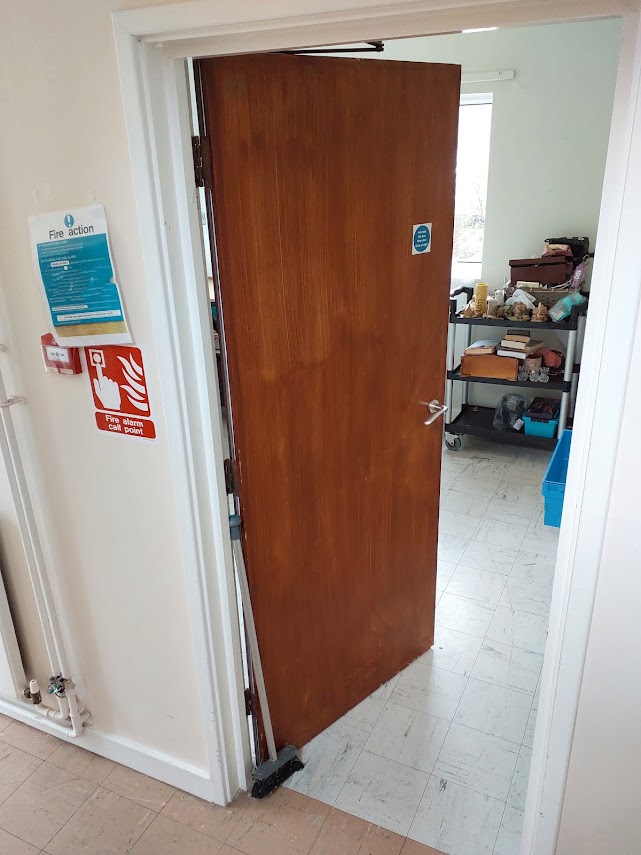
Some installation details are concealed behind architraves or other finishes. Targeted intrusive inspection can help investigate selected details, such as the frame-to-wall gap, accessible fixings and associated fire stopping.
Our usual starting point is a sample of approximately 10% of door sets, with the selection and extent agreed for the building. This is a sampling approach, not confirmation of every concealed detail across the premises. Findings may indicate a need for a wider sample or further investigation.
The proposal will define the opening up, access arrangements and responsibility for making good. Intrusive sampling does not establish the condition of unsampled door sets.
What you receive
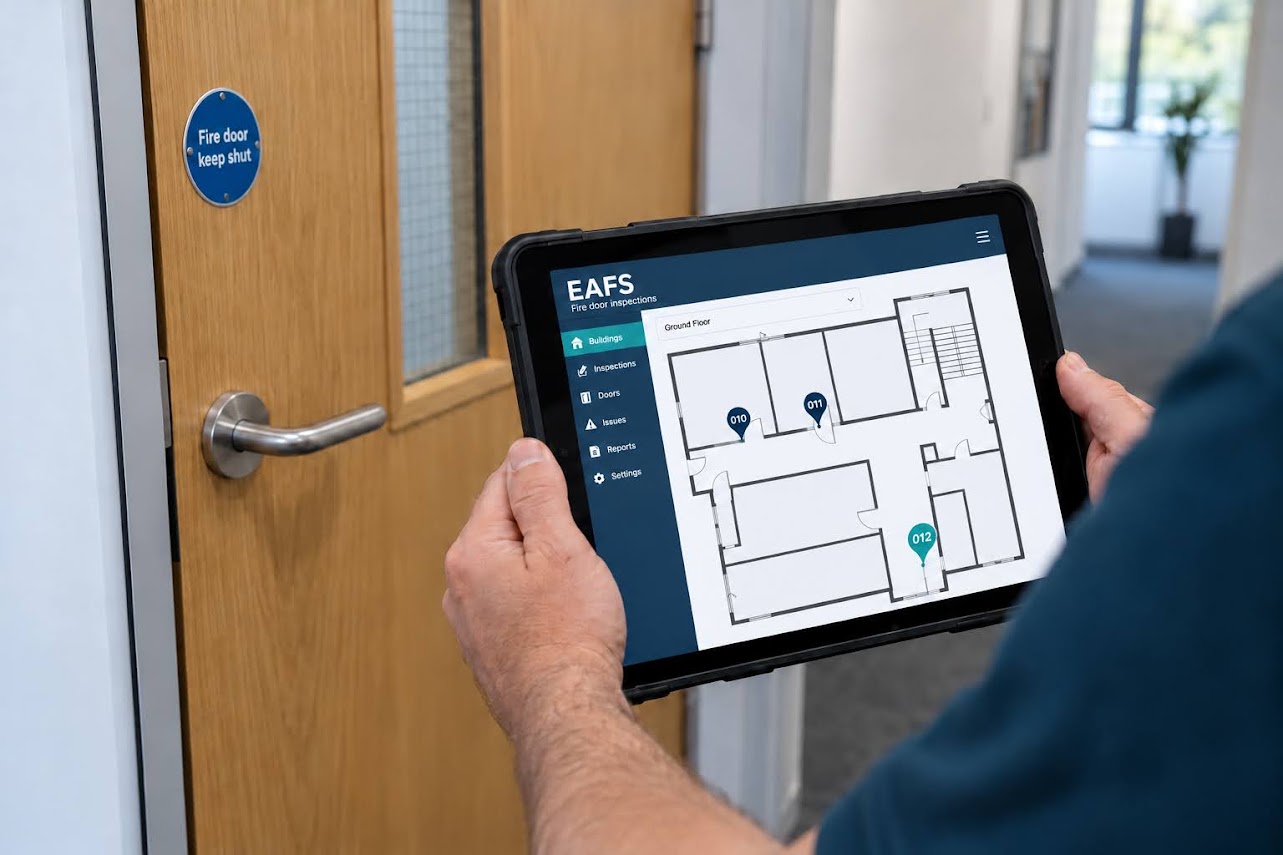
- A digital record identifying inspected door sets
- Recorded observations and relevant measurements
- Photographic evidence of findings
- Identified defects and recommended next steps
- Details of access restrictions, missing information and other limitations
- QR asset identification for inspected door sets as standard
Periodic inspection programmes
We support ongoing programmes for individual buildings and multi-site portfolios. Inspection intervals and access arrangements are agreed around the building’s use, the relevant requirements and the client’s management arrangements.
Consistent asset identification helps you follow the condition of door sets over time. An inspection records their condition at the time of the visit; damage, alterations and operational changes can occur afterwards.
Scope and limitations
An inspection is not a fire resistance test or a guarantee of future performance. A non-intrusive inspection cannot confirm concealed installation details. Product identification, supporting documentation and further investigation may be needed to establish the suitability of particular components or alterations. Advice should be sought from a competent fire risk assessor to determine the works required in the context of the building’s fire risk assessment, fire strategy and intended use.
Arrange your inspection
Send us the site address, approximate number of door sets and any existing asset schedule, fire strategy, floor plans or fire risk assessment. We can discuss whether non-intrusive inspection, intrusive sampling or a combination is appropriate.